


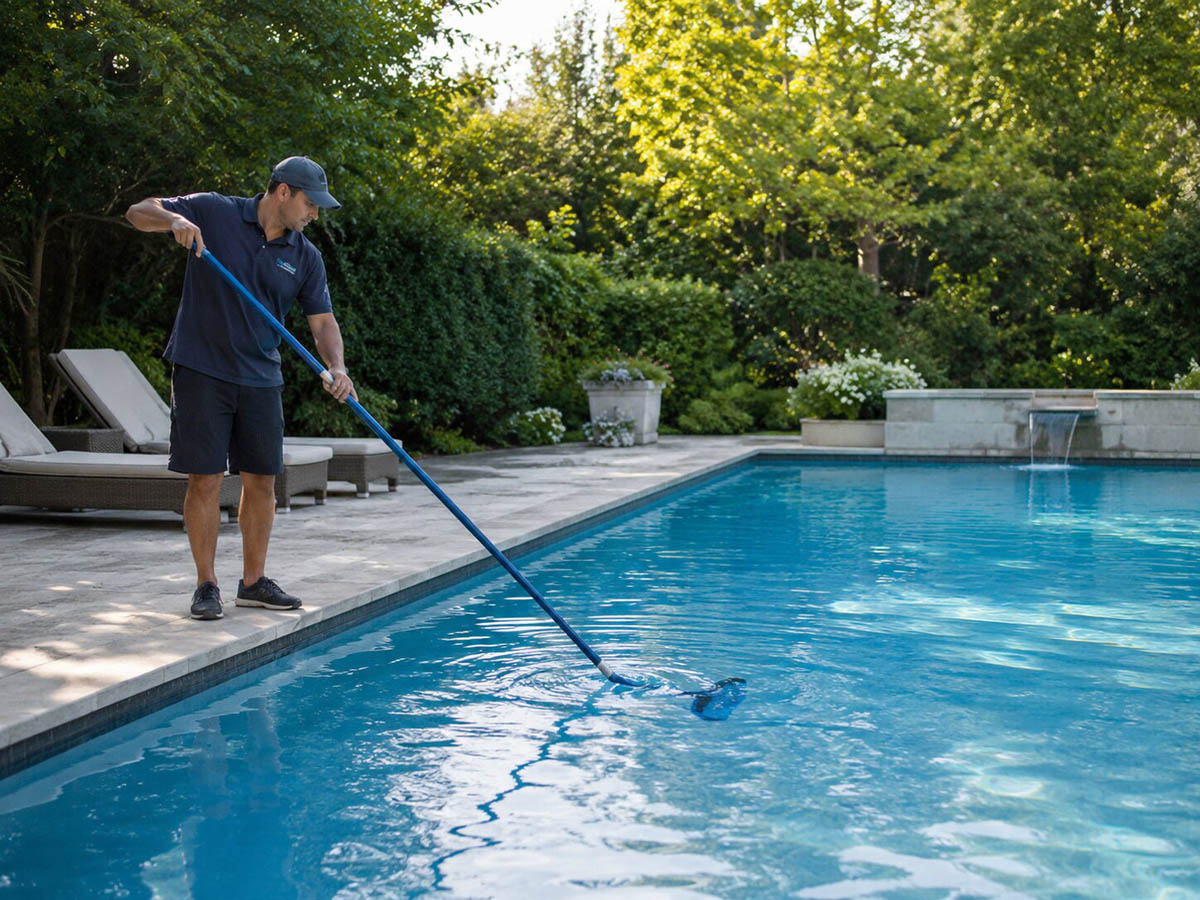
There are three main factors that form the basis of swimming pool maintenance: circulation, cleanliness and pool chemistry. Coincidentally, these three factors are of interest to all pool owners. The reason for this is that if one of these three main factors is overlooked, the likelihood of problems in the pool can increase.
We have compiled the most curious questions about these three issues for you:
1.How often should we clean pools?
If you use your swimming pool frequently or if there are a lot of leaves, etc. that fall on the surface of the pool, the pool skimmers and pump baskets should be cleaned daily. Vacuuming your pool once a week will be useful to maintain the chemical balance of your swimming pool because it prevents organic pollution. Weekly cleaning will also help to keep the ceramics dirt-free.
Depending on the type of your pool pump, backwashing or filter cleaning may also be necessary during the summer season.
In order to prevent algae growth in swimming pools, it is necessary to keep your pool clean at all times, maintain chemical balance and provide regular filtration every day.
You can read our article for more detailed information on moss formation.
2. How long should you keep the pool pump on per day?
Your pool pump plays a major role in keeping the pool clean. Circulation of the pool water plays a key role and is often underestimated. Circulating the pool water allows the water to be filtered and makes it easier for the chemicals added to the water to be distributed throughout the pool. Think of it like adding cream and sugar to your coffee and then stirring it with a stirrer. It will also help to maintain the temperature of your pool.
To calculate how many hours your pool pump should stay on, you need to find out how much water your pump pumps per minute. You can find this information by reading the pump manufacturer's installation descriptions or by calling the manufacturer directly.
If you multiply the number you have learned by 60 and divide it by the total tonnage of your pool, you can find out how long your pump should stay on.
3. How do you maintain the chemical balance of your pool?
When we talk about the chemical balance of the pool, it is based on how much more chemicals the water can handle. When the water reaches equilibrium, neither more nor less chemicals are needed.
Although your knowledge of chemistry can be a savior at this point, you don't need to be a scientist to get the chemical balance of water right. You just need to know what needs to be tested and the levels needed to achieve balance.
The four main test kits can be divided into pH, chlorine, alkalinity and calcium hardness.
At the end of the measurement of all four of these, here are the levels you want to see:
Chlorine: 1.0 - 3.0 ppm
pH: 7.4 - 7.6
Alkalinity 80 - 100 ppm
Calcium hardness 200 - 400 ppm
Although this information can help you balance your pool, you will always need support.